
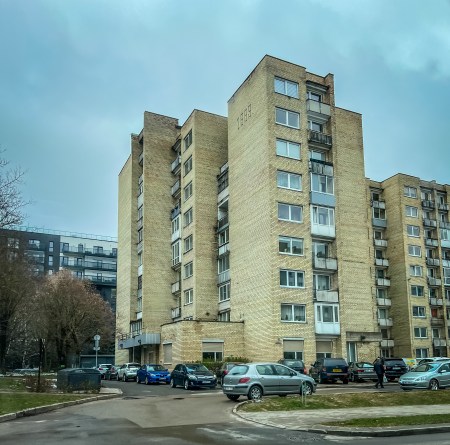
Last year we traveled through nine Eastern European countries – Estonia, Latvia, and Lithuania in the spring, followed by Hungary, Slovakia, Croatia, Serbia, Bulgaria, and Romania on our recent Danube River cruise. And the one thing that unites all of them is a chapter that Western Europe simply doesn’t have: the Soviet Occupation Chapter.
But first, a word about the label “Eastern Europe” itself.
It’s tempting to lump whatever countries aren’t considered part of Western Europe into one big category called Eastern Europe. I’m certainly guilty of that, and for the purposes of simplifying this blog post, that’s basically what I’ve done.
The reality is that regional identification in Europe is a lot more complicated. Europe is nothing if it’s not one giant identity debate. Countries don’t all officially identify one single way, and regional labels often overlap depending on geography, history, politics, or just who you ask.
For example, Estonians will tell you they are Baltic – but also Nordic. Romanians will tell you they are Balkan on Monday and Eastern European on Tuesday. And for the love of world peace, please do not make the mistake of calling Poland Eastern European. They are Central European. I made that mistake so you don’t have to.
Basically, Europe’s regional map isn’t a neat set of boxes – it’s more like overlapping Venn diagrams, with a lot of historical baggage and national pride mixed in.
But here’s a basic map:

Again, for the purposes of this post, I’m using Eastern Europe as a blanket term.
Traveling in Eastern Europe is unlike traveling anywhere else in the world. Eastern Europe has just as much history as Western Europe, but Eastern Europe has a chapter that’s missing from Western European history: the Soviet Occupation Chapter.
As a result, Eastern Europe has this edge and toughness to it that shows up everywhere – from the architecture to the conversations with locals. It’s also a region in the middle of huge change: some places are experiencing a kind of rebirth, while others feel like they’re sliding backward economically and culturally, which is sobering to see up close.
The Soviet Occupation Chapter
The legacy of Soviet occupation is visible everywhere. The most obvious reminders are the massive, soulless concrete apartment blocks that dominate city outskirts – built quickly to house workers under centrally planned economies, and still home to millions today. These buildings have all the warmth and charm of a filing cabinet.

There are also monumental war memorials, enormous public squares, and statues designed around the Soviet philosophy that if something is big enough, it must be inspiring. Many of these monuments have since been repurposed, ignored, or treated the way you treat an embarrassing uncle at Thanksgiving: he’s ours, but we don’t talk about him.

Infrastructure still bears the Soviet stamp too – rail lines, factories, power plants – mostly outdated and inefficient, but not in the budget to replace.
And then there are the less visible remnants: economic gaps, skepticism toward government, generational divides over authority and democracy. Decades later, the Soviet imprint remains like a stubborn stain history never quite got out.
A Post-1990s Rebirth
In the decades since communism’s collapse, many cities have reinvented themselves with startling energy. Places once defined by central planning are now busy, creative, and plugged into the modern world.
Budapest is the standout. Since 1989, the city has transformed – shifting from a state-controlled economy to a market-driven one, attracting foreign investment and becoming a regional hub for finance, tech, and services. Walking around, you feel the ambition of it. Ken and I agreed it’s the city on this cruise we’d be most likely to revisit.
Other examples: Tallinn has become a tech haven for digital nomads, Vilnius a hub for art collectives and experimental design, and Belgrade has developed a serious nightlife reputation.
The past is still everywhere – but it’s less a weight dragging things down than a scar: visible, permanent, and part of what makes these places so compelling.
The In-Between Cities of the Danube
If I’m being honest, between Budapest and Bucharest, a lot of the smaller towns blurred together – gray buildings, quiet streets, and the lingering feeling of places still recovering from wars, communism, or both.
Vukovar’s bullet-scarred ruins were haunting. Vidin felt bleak in a way that was hard to forget. And Ruse tried hard for “Little Vienna,” which, well . . . points for effort.
All of it reinforced what we kept noticing throughout the trip: Eastern Europe rewards curiosity, but it doesn’t always make things easy.
Which brings me to a few things you should probably expect if you travel in Eastern Europe.
Varying Levels of Infrastructure
While major cities have excellent transportation infrastructure, smaller towns and rural areas will likely have limited public transportation, entirely random bus or train schedules, and sketchy road conditions. The internet is spotty in more than a few places. And once you see the wiring schemes, you’ll understand why. Don’t expect Western-European efficiency, or you’re in for a surprise.

Language Barriers
In major cities and tourist areas, English is widely spoken. But if you venture outside those areas, well, how’s your Cyrillic? Speak any Russian? Older generations especially will often only speak the local language or Russian. Signs may or may not be bilingual. Mostly not.
The Patchwork of Currencies
Croatia is the only country we visited that currently uses the Euro. The other countries use their local currencies: Hungary (forint), Bulgaria (lev), Serbia (dinar), and Romania (leu).

Cash is still king in many places, and calculating how much to pull from an ATM – without ending up with a wallet full of leftover dinars – is its own small adventure.
Unpredictable Operating Hours
We ran into this a lot. A lot of businesses (restaurants, museums, shops) keep hours that are the equivalent of: open when we’re here, closed when we’re not. Even if you double-check opening hours, bring your patience.
Smoking Culture
It’s everywhere. The person walking in front of you outside will almost certainly be smoking. Outdoor restaurant seating is not the refuge it is in Western Europe – the concept of a non-smoking section hasn’t fully arrived. 🚭
Political Tensions
In Budapest, certain topics sparked immediate, strong reactions. Viktor Orbán came up more than once. Our two guides were polar opposites – one nearly militantly pro-Orbán, the other passionately anti. It made for some of the most memorable conversations of the trip.
Conclusion: Why It’s Worth It Anyway
Eastern Europe isn’t always an easy place to travel. It can feel heavy. The history is recent, the scars are visible, and the contrast between rebirth and decline can be jarring.
But that’s also what makes it unforgettable.
This isn’t Europe packaged neatly for postcards. It’s Europe with rough edges, complicated stories, and places that are still actively becoming whatever they’ll be next. You feel the weight of what happened here – and that weight is the whole point.
Would I send someone here for their first European trip? No. But if you’ve done Western Europe and you’re ready for something with more depth, more complexity, more edge – Eastern Europe will stay with you long after you’re home.
Cheers!


Leave a Reply