

Today’s theme: Sake and beef with a side of Shinto.
We spent the day in Kobe, which is famous for two things: beef and sake. Rather than join the ship’s excursion herd, we hired a guide so we could go at our own pace.
Sake Brewery Museum
We started our day at the Hakutsuru Sake Brewery Museum.
Hakutsuru was founded in 1743, which means they’ve been making sake continuously since before the United States was a country. The brewery sits in Nada, a region that produces roughly a third of Japan’s sake. The secret is Nada’s excellent water, combined with centuries of convenient access to Osaka and Kyoto, which apparently have always contained large numbers of thirsty people.
Here’s the map I know you’ve been waiting for:

The museum occupies the original 18th century brewery buildings and walks you through the entire sake-making process: rice polishing, koji (a beneficial mold that converts rice starches into sugars so fermentation can happen) cultivation, fermentation, pressing, and several other steps that I kind of lost the thread on, because . . . the museum uses very life-like mannequins in their displays, which I found both distracting and slightly creepy.

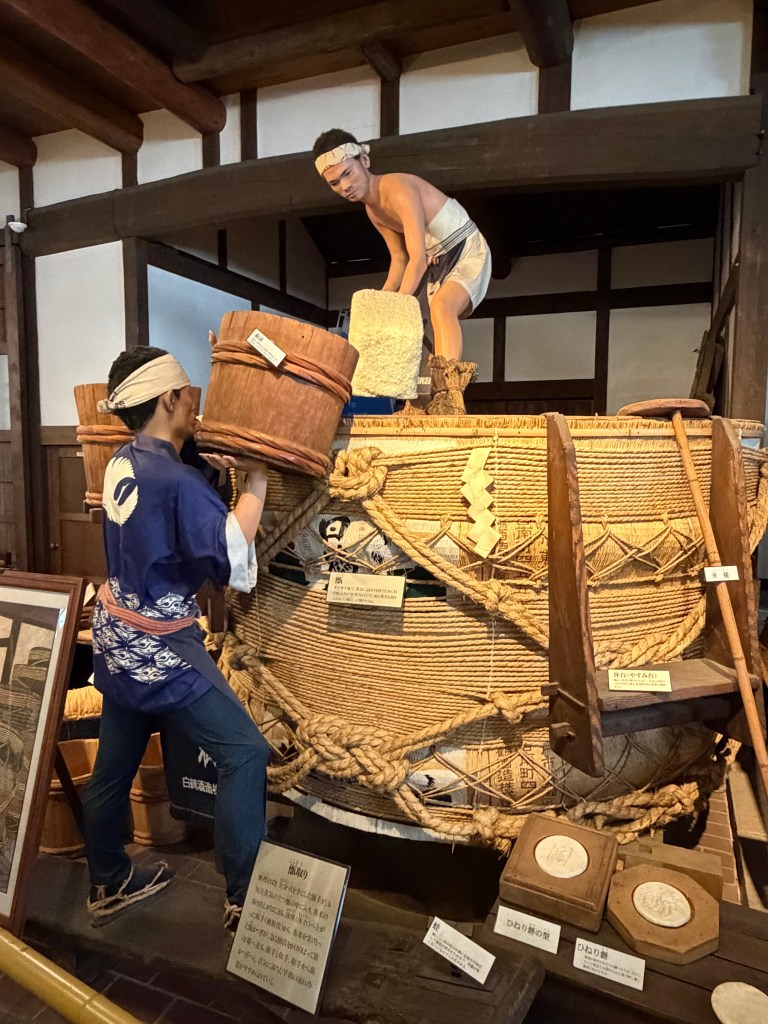
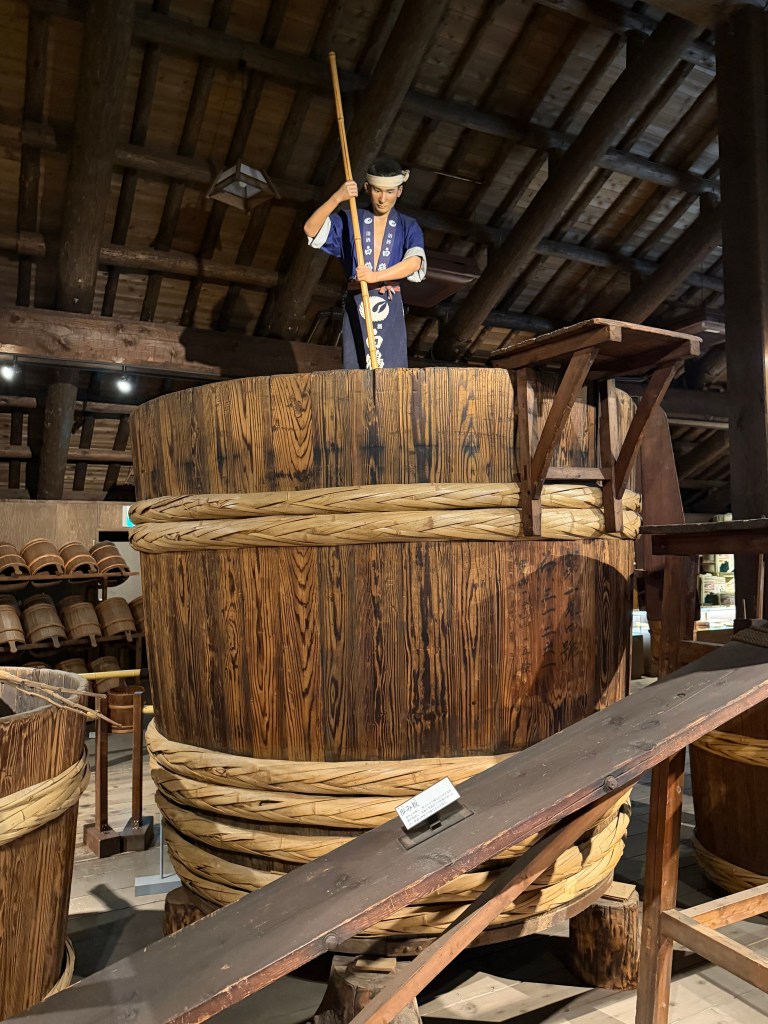

On to the sake tasting.
We tasted our way through the different styles of sake. Each style is distinct – we worked through everything from light and floral to full and earthy, and each one was better than I expected (more on this in my upcoming what to drink in Japan post). I’ve been a little surprised by how much I’m enjoying sake. Delicious.
For the record, I showed tremendous restraint in the gift shop, and only bought one bottle to bring home.
Sidebar: Japanese women are pros at staying out of the sun. They either hide under a big floppy hat or an umbrella. I feel like we are kindred spirits that way. But the downside to all that shade is a collective deficiency in vitamin D among Asian women. And probably me.

Kobe’s Chinatown
Next: a walk through Nankinmachi, Kobe’s Chinatown (and one of three major Chinatowns in Japan – the other two in Yokohama and Nagasaki). We must have been there during school lunch break, because there were scores of high school aged kids running around from food stall to food stall – all in uniform. The girls all had panda headbands (I feel like there was a reason for this, but it’s unknown to me), and anywhere between 1 and 7 of those weird labubu dolls hanging from their backpacks.
History Tangent
Nankinmachi dates to the 1868, when Kobe opened as a treaty port. Japan didn’t open its ports to trade so much as have them opened for it. For over 220 years, the Tokugawa Shogunate maintained a strict policy of national isolation – keeping the outside world outside. Then, in 1853, US Commodore Matthew Perry sailed four heavily armed warships into Edo Bay, delivered a letter from President Millard Fillmore demanding Japan open its ports, and left to give Japan some time to think on it. Perry came back the following year with nine warships, in case the original point hadn’t landed. The Shogunate did the math on its feudal military against a US naval bombardment and capitulated.
This is what historians politely call gunboat diplomacy, which is a very tidy phrase for showing up at someone’s door with a fleet of warships and suggesting they reconsider their trade policy.
Anyway. After Japan opened its ports to trade, foreign nationals were required to live in designated concession districts, separate from the Japanese population. Chinese merchants arrived, settled into these concession zones, built a community, and never left. Roughly 150 years later, there are high schoolers in panda headbands eating street food there.
There were some incredible looking (and smelling!) things going on at those food stalls, but we resisted the urge to snack since we knew we had a Kobe beef lunch coming up later in the day.


Our guide suggested taking the subway to our next stop, and I will be honest: my first instinct was anxiety. I had read about Tokyo’s rush-hour train situation – the professional subway pushers (this is a real job in Tokyo, btw) who compress human beings into train cars using techniques borrowed from industrial packaging. I had filed this under: No fucken way.
Our guide assured us that the serious train-stuffing is largely a Tokyo and Osaka problem. Kobe’s subway was calm, spacious, and completely undramatic.
Shinto & the Ikuta Shinto Shrine
A quick word about Shinto, because if you spend more than an hour in Japan, you’re going to run into it, and you should know what you’re looking at.
It has no founder, no central text, no hierarchy, and – this is my favorite part – absolutely no interest in recruiting you. Nobody is standing on a street corner with pamphlets. Nobody is warning you about your eternal destiny, or suggesting you consider upgrading to Premium Spirituality Plus for only $19.99 a month. You toss a five-yen coin (roughly three US cents) into an offering box, say your prayer, and everybody goes about their day.
Honestly, it’s refreshing.
At the core of Shinto are kami – spirits associated with natural places and forces. A mountain. A waterfall. An ancient tree. Think about it: if you believed a thousand-year-old tree contained a divine presence, you’d probably take better care of it.
We visited Ikuta Shrine, which sits right in the middle of downtown Kobe. Tradition says it was founded in 201 AD, which is an extremely long time ago. For reference: the Roman Empire still had another 275 years to go before it collapsed.


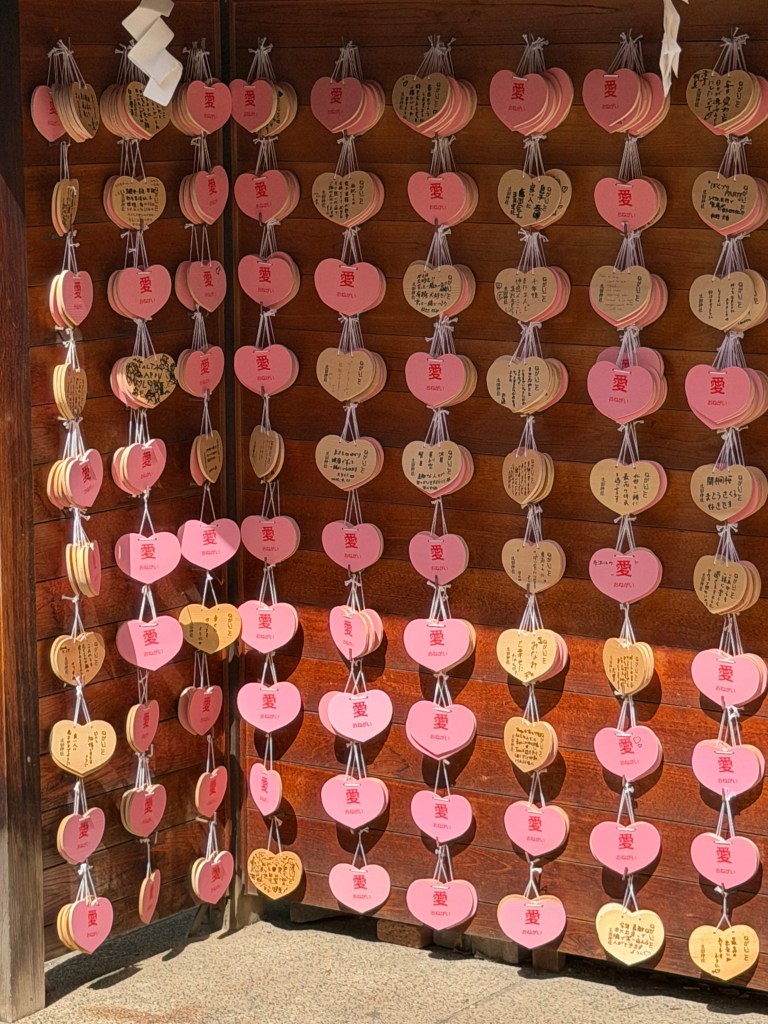

The Ikuta shrine is dedicated to Wakahirume-no-Mikoto, a sun goddess associated with weaving and, by extension, matchmaking. The logic leap from weaving to matchmaking is a stretch, but the shrine was full of young couples buying heart-shaped lucky charms, so clearly it’s working for someone.
How to Pray at a Shinto Shrine
Everyone is invited to pray at a Shinto shrine, and our guide showed us the proper way to do it.

I did pretty well for my first attempt at Shinto prayer. I was almost derailed by the purification station, though. I’ll wash my hands with the sacred communal water, but no way I’m washing my mouth. Admittedly, there’s a lot of bowing, but you’re in Japan, you’re going to spend a significant amount of time every day bowing.
Overall, the underlying message seems to be: nature matters, your ancestors matter, and maybe you should slow down occasionally and notice both.
Not bad advice.
Wagyu & Kobe Beef
TL;DR: All Kobe beef is Wagyu, but not all Wagyu is Kobe beef.
Wagyu simply means Japanese cows, but they are special cows, prized for their intense, fine-grained marbling that literally melts at room temperature.
Real Kobe beef is the S-tier of wagyu beef, but it’s a tiny, highly restricted category. Of the roughly 500,000 Wagyu cattle processed annually in Japan, fewer than 1% achieve the prestigious Kobe certification. This helps explain the jaw-dropping price tag for Kobe beef.
A useful rule of thumb: if your “Kobe beef” dinner costs less than a car payment, it’s not Kobe beef.
In Japan, restaurants serving certified Kobe beef are required to display an official golden Kobe beef statue – if they don’t have an official golden statue, they don’t have official Kobe beef.

An Unforgettable Lunch
Our guide took us to Royal Mouriya, a tiny twelve-seat restaurant we never would have found on our own. Golden statue ✅. The chef cooked directly in front of us on a blazing hot iron grill.
You select your cut of beef, and it arrives on a wooden board looking almost too pretty to eat. Then, the chef slices it into bite-sized pieces (I was wondering how we were going to cut the meat with chopsticks) before giving each one just a few seconds on the grill.
That’s all it needs.
The fat melts at such a low temperature that cooking it too long would basically destroy the reason you’re eating it.
And don’t even think about asking the chef to cook your steak to well done. You’ll cause an international incident and probably get kicked out of the restaurant.


The texture is unlike any beef I’ve ever eaten. Tender doesn’t really describe it. The meat simply dissolves. Chewing really isn’t necessary. Without a doubt, one of the best things I’ve ever eaten.
If you go to Kobe and you don’t eat the Kobe beef, you’re making a big mistake.
Tomorrow: Kochi 🇯🇵


Leave a Reply