

Good morning from Vidin, in the extreme northwestern part of Bulgaria, on the border with Romania.


What to say about Vidin?
If someone were to design a travel brochure for Bulgaria, Vidin isn’t going to make the cover. Hell, I’m not sure Vidin would make page six. Vidin is one of Bulgaria’s oldest cities – an important medieval stronghold during the Bulgarian empires (yes, Bulgaria had empires). In the 20th century, Vidin developed into a regionally important industrial and port center, with state-owned factories that boosted its population to more than 65,000 by the late 1980s.
But.
After the fall of communism in 1989, many of these state-owned industries collapsed, leading to high unemployment and limited economic opportunities. As a result, large numbers of younger residents left in a hurry for Western Europe and better opportunities. This left Vidin with low birth rates and an aging population. Today, Vidin’s population has fallen to around 33,000 – a nearly a 50% drop over three decades, making it one of the fastest-shrinking cities in Bulgaria and the European Union.
Takeaway: No one is putting Vidin on the top of any Hidden Gems of Eastern Europe list.
Fun fact: Bulgaria is the only country in the EU that uses the Cyrillic alphabet. Luckily, I am really good at reading Cyrillic.


This morning, there was an excursion option to go visit 230 million year-old rocks (Belogradchik Rocks). But it was going to involve an hour on the herd bus to get there, so we bailed. Decided to get lost on our own in Vidin.
Observations From Our Walkabout
The uniform for Bulgarian men of a certain gravitas is the tracksuit. Stereotypes exist for a reason. And it’s kind of glorious.


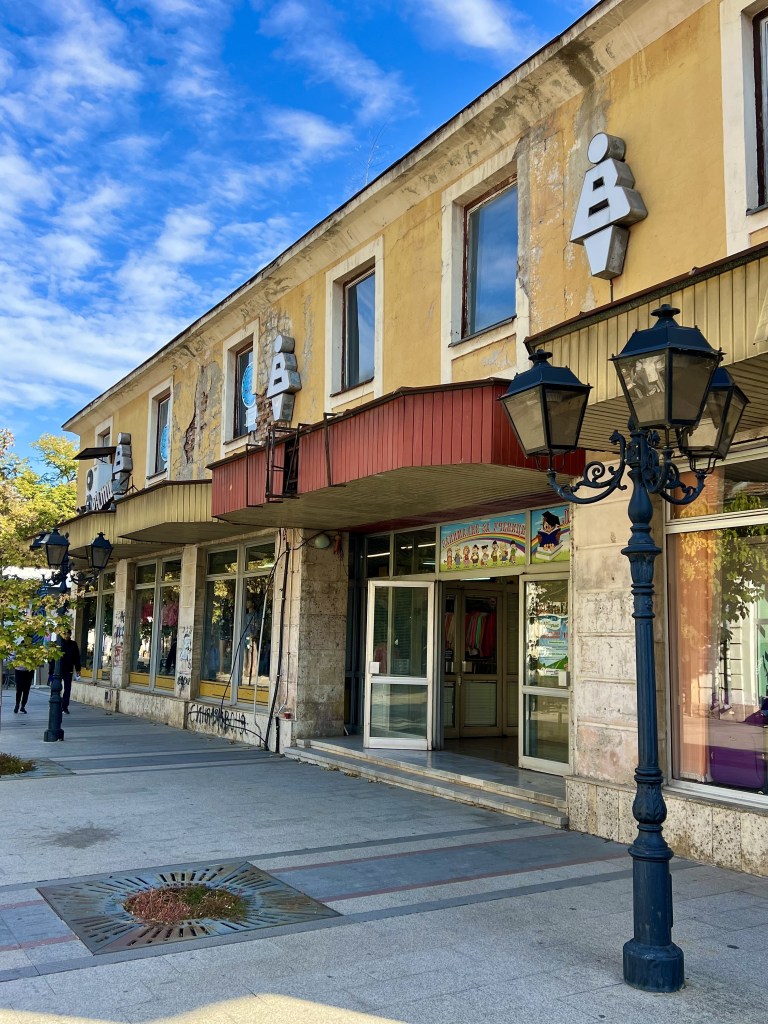
Relics of communism are everywhere. Big gray boxes of sadness. Most of the buildings are run-down and/or decaying. Grim is probably the right word.


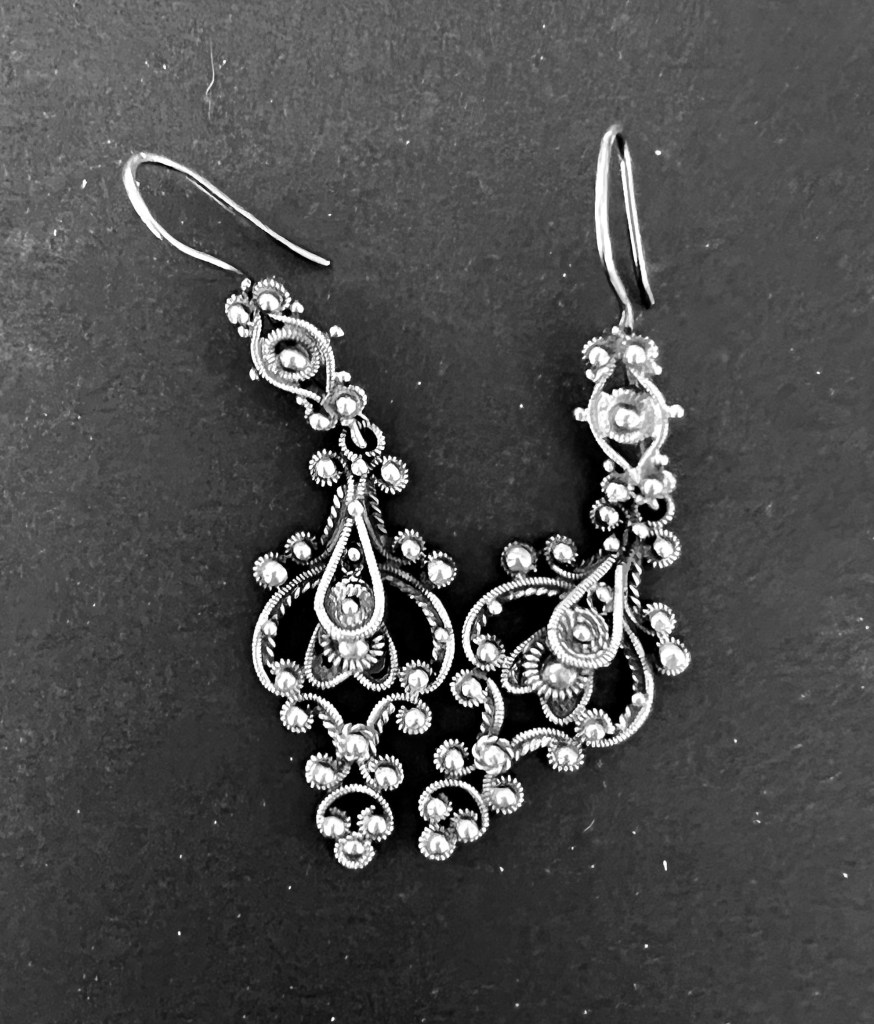
We managed to find one little art shop with something to buy other than mass-produced souvenirs made in China. The shop had some lovely pottery, as well as some traditional Bulgarian jewelry. I did my part to support the local economy.

Bulgarian Rose
Bulgaria is famous for its rose production. The Bulgarian rose – known botanically as Rosa damascena – is one of the country’s most recognizable national symbols. Bulgaria treats rose the way France treats wine or Italy treats pasta: like a rockstar. Bulgaria has been cultivating roses for centuries, and Bulgarian rose oil is considered among the finest and most expensive in the world. In fact, it takes thousands of rose petals to produce just a single drop of rose oil, which is prized by luxury perfume houses across Europe.
Rose products are absolutely everywhere in Bulgaria. Any rose product you can think of, Bulgaria makes it. Rose soap, rose shampoo, rose hand cream, rose foot cream, rose face cream, rose night cream, rose perfume, rose lipstick, rose jam, rose honey, rose sugar, rose syrup, rose tea, rose liqueur, rose wine.
You get the picture.
I’m always a little skeptical about buying rose-scented products. Real rose smells incredible, but too often, rose-scented products end up smelling like plastic or chemicals. But I took the recommendation of one very enthusiastic saleswoman, and I bought a few tubes of these guys – and they smell absolutely wonderful. I’m going to be sad when they’re gone.


Bulgarian Socialist Party: A Rose Tangent
Walking around Vidin, this piece of street art caught my attention (I’m always stopping to take pictures of street art). I was curious about the rose symbol, so I put the photo into Google Translate and learned that this says: BSP VIDIN. What’s BSP? Well, that would be the Bulgarian Socialist Party.
Interesting.
After the fall of communism in 1989, the Bulgarian Communist Party rebranded itself as the Bulgarian Socialist Party, and formally adopted the red rose as its official symbol. No more red star and hammer & sickle. The rose was chosen deliberately to present the BSP as a modern center-left party connected to broader European socialist movements. I’m not sure exactly how it conveys that message, but apparently, it does.

Baba Vida Fortress
Back on the herd bus this afternoon to visit the 11th century Baba Vida Fortress and learn about Bulgarian wine.
Our guide today, Bena, was one of the best guides of the trip. She had some priceless quotes, made even more priceless because of her unironic Natasha from Rocky & Bullwinkle accent:
“The communists did not have architecture. Everything in stupid colors. They put one good slide in park. Everything else was pure disaster.”
I’ll admit to a little castle/fortress fatigue by this point in our trip.
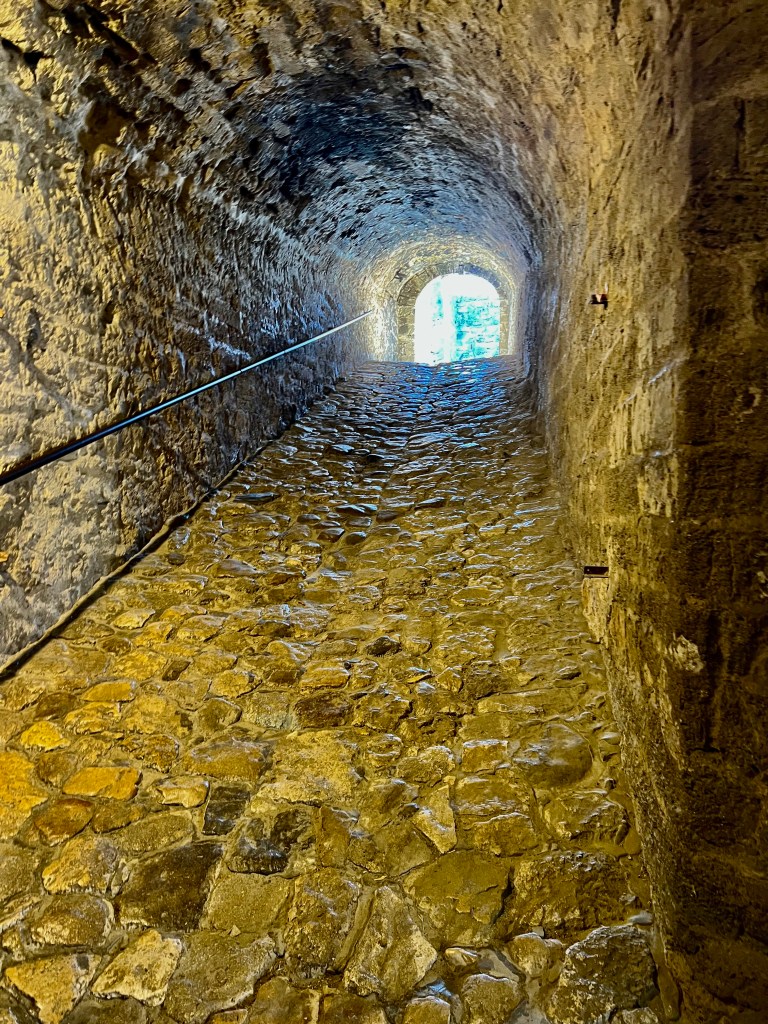
Ken climbed to the very top of the castle – because of course he has to climb to the top. There’s very little in the way of safety and security at the castle other than one little sign that said, “Do not fall on rocks.” For the record, I did not fall on rocks. And they were slick MFers.



Before we got back on the herd bus, we had a quick bathroom break, and we got this quote from Bena:
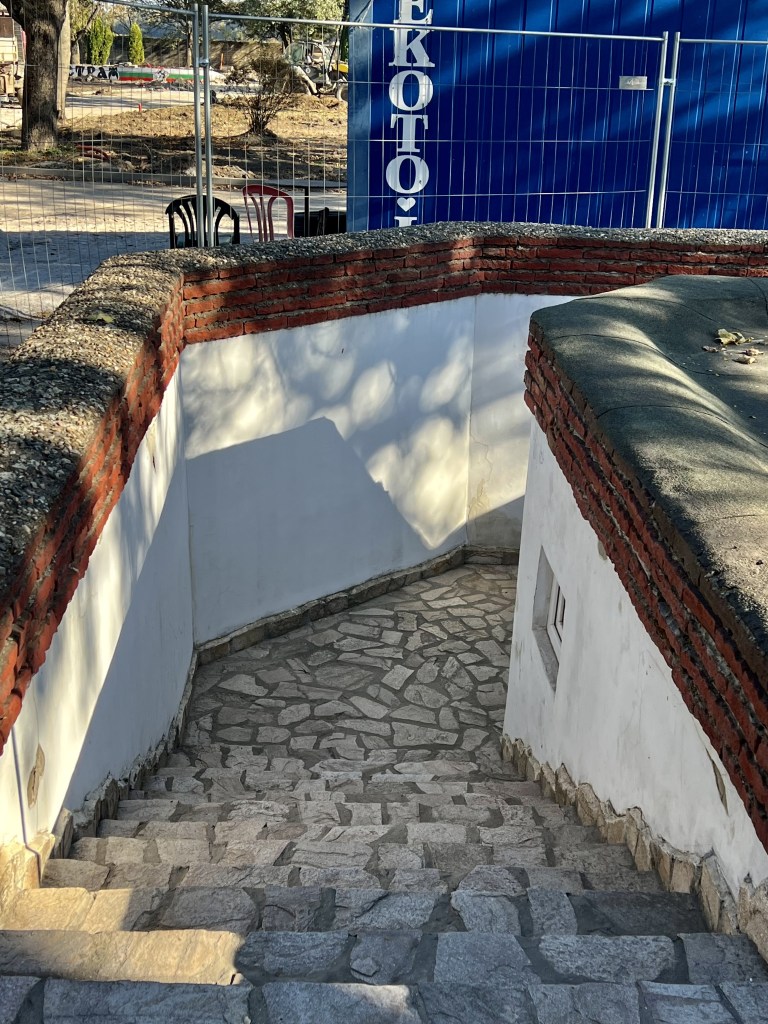
“And here you can have real cultural experience and use underground communist toilet.”
Underground what, now?
Can confirm this was an experience. The underground communist bathroom attendant has her own little office down there, complete with easy chair and a television. Mmmm. Cozy. I have seen plenty of bathroom attendants in Europe, but none with her own office.


Dos Alamos Winery
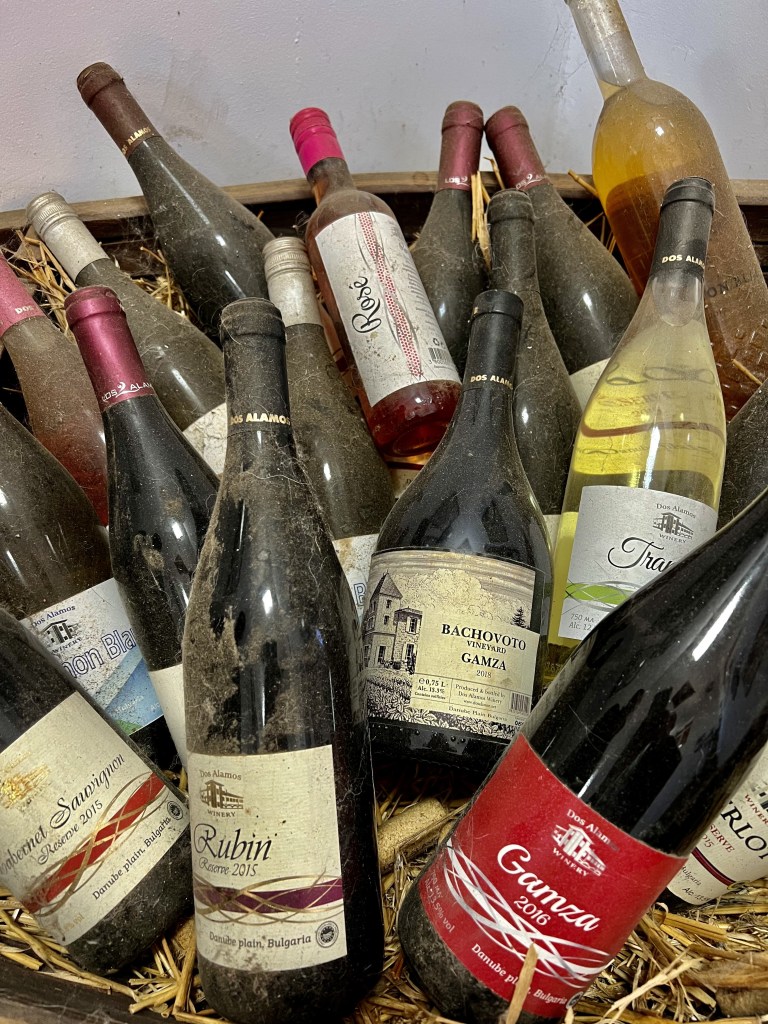
So now that we’ve had that real cultural experience, we’re back on the herd bus, heading to the Dos Alamos Winery – a boutique, family-run winery located in the village of Negovanovtsi. Immediately, I’m confused by the Spanish name. The winery was established in the early 2010s, and apparently, the owners chose the name because they thought it sounded more like an international brand. I dunno. I think they missed the mark there.
Bulgaria is one of Europe’s oldest wine-producing countries, yet it remains underappreciated internationally. Dos Alamos (the two poplars) continues the Bulgaria’s long tradition of winemaking, focusing especially on wines made using the indigenous Rubin and Gamza grapes. I’ll write a post with more about Bulgarian wine in the weeks to come. If I do it now, this post will turn into a TL;DR situation.


Another Bena gem:
“We are people of red wine. White wine, you are ok. But why you are not red?”
It’s been a good day.
I saved the best Bena quote for last. She lived through the communist years here, and she’s even written a book about her experiences, which I was happy to buy.
“Democracy isn’t a present for your birthday. You have to fight for it.”
Touché, Bena.
Travel date: October 20, 2025.


Leave a Reply