
Norway has the highest alcohol taxes in Europe, a state monopoly on anything stronger than 4.7% beer, and roughly four hours of usable daylight in January. And yet — somehow — Norwegians have built one of the most quietly obsessive drinking cultures on the continent. How did a country that makes you show ID to buy wine at a government-run shop with bank hours end up producing world-class aquavit, a booming craft beer scene, and a coffee habit that borders on liturgical?
Spite, mostly. And geography.
Norway may make you work for your drink, but it rewards persistence.
And because I consider wandering through foreign grocery and liquor stores legitimate cultural research, I did some investigating at the local liquor store, Vinmonopolet, while we were there. Ken does not share this particular passion of mine, so I generally send him off to climb a mountain while I browse the aisles.
Everybody wins.
Here’s what to drink in Norway—and what those drinks tell you about the country.
The Vinmonopolet Problem
Let’s start with the elephant in the room: you cannot just casually buy a bottle of wine in Norway. You have to go to Vinmonopolet — “the Wine Monopoly,” a name that wastes no time on euphemism — a state-run chain that holds the exclusive license to sell anything above beer strength (4.7%). It closes early, it closes on Sundays entirely, and it treats a Tuesday-night bottle of Malbec feel like a transaction requiring government clearance.

The result isn’t less drinking. It’s planned drinking. Norwegians don’t grab a bottle on the way home; they stock up like they’re bracing for a siege, because in a sense they are — the siege is called “winter.” A well-stocked liquor cabinet in Oslo is less indulgence than infrastructure.
Aquavit: Norway’s Water of Life
If Norway has a signature spirit, it’s aquavit.
Aquavit is made throughout Scandinavia, but the Norwegian version has its own personality. Norwegian aquavit tends to be golden in color, thanks to time spent aging in oak casks. Danish and Swedish aquavits are often grain-based, while Norwegian aquavit is traditionally made from potatoes. The flavor profiles differ, too: Swedish aquavit often leans toward anise and fennel, while the Norwegian style is typically driven by caraway and sometimes dill.
Can’t say I’m a fan of either style.
The name comes from the Latin aqua vitae, or “water of life.” Like so many things humans eventually decided to drink recreationally, aquavit was once considered medicinal. Herbs and spirits were supposed to cure what ailed you. These days nobody is prescribing aquavit for the plague, but it remains deeply tied to Norwegian celebrations and food traditions.
The good stuff is aged in old sherry casks and shipped across the equator and back, a practice that started, legend has it, by accident: a batch sent to Australia and returned unsold turned out better for the roundtrip. Whether that’s true or just a very good origin story, Norwegians have committed to it completely. Linie aquavit — “the line,” referring to the equator — now advertises the voyage on the label like a résumé.

You drink it icy cold, in a single decisive shot, usually alongside something salted, cured, or otherwise daring you to need a chaser. Julebord season — the endless run of Christmas work parties from late November through December — runs on the stuff. One glass to be polite. A second because someone toasted something. A third because it’s Tuesday and it’s dark outside and it will remain dark outside for several more months.
I wish I could tell you all of this history turned me into an aquavit convert.
It did not.
Caraway and I remain on polite but distant terms.
Norwegian Cider
Norway is probably not the first country that comes to mind when you think about cider. France? Sure. England? Absolutely. Norway? I was as surprised as anyone.
But western Norway — particularly Hardanger — has been growing apples for centuries. The steep hillsides surrounding the fjords create a surprisingly good environment for orchards: long summer days, cool temperatures and all that reflected light bouncing off the water. Turns out dramatic scenery is also useful for agriculture.
Cider production here has gone from old farmhouse tradition to a serious modern industry. Sider frå Hardanger, or Cider from Hardanger, even has protected geographical status, meaning the name is tied specifically to cider produced from apples grown in the region.


And Norwegian cider isn’t trying to be alcoholic apple juice. The better examples tend to be crisp, dry and refreshing, with plenty of acidity — the kind of thing that makes considerably more sense once you’re sitting beside a fjord eating something rich.
We saw cider everywhere. Nearly every restaurant and bar we visited had at least one on tap alongside the beer. Naturally, this required investigation.
We tried several, including this pear cider, and they were uniformly delicious.
I had gone to Norway expecting aquavit.
I did not expect the cider to be one of my favorite things.
Beer: We Somehow Failed Norway
You know what? I don’t think we drank any beer in Norway this trip. Shame on us.
Beer has been part of Norwegian life for a very long time. The Vikings brewed it, medieval farmers brewed it, and for centuries Norwegian farms maintained their own brewing traditions. Beer wasn’t simply something you drank at the end of the day—it was part of celebrations, weddings, funerals and Christmas.
One of the more interesting survivors of that farmhouse brewing tradition is kveik, a family of Norwegian farmhouse yeasts passed down through generations of brewers. Unlike most brewing yeasts, kveik can ferment happily at remarkably warm temperatures — and quickly — which has made it something of a celebrity in the modern craft beer world.
Norway now has a thriving craft beer scene alongside the ubiquitous pilsners you’ll find just about everywhere. Breweries have revived old farmhouse techniques while also producing the IPAs, stouts and other styles familiar to anyone who has wandered into an American taproom during the past twenty years.
So naturally, with all of that brewing history to explore, we drank zero beers.
I have absolutely no explanation for this.
We managed aquavit, gin, cider, mystery liquor served in a glass made of ice, gallons of coffee and enough hot black currant juice to sustain a small Norwegian village.
But beer? Well, we’ll do better next time.
Norwegian Gin
Looking around the Vinmonopolet was aquavit nirvana, obviously, but there was also a surprisingly good selection of Norwegian gin.
I came home with a bottle of Bivrost Arctic Gin, made by Aurora Spirit Distillery in northern Norway (above the Arctic Circle). I may or may not have bought it because there was a Viking on the bottle.

Bivrost leans heavily into its Arctic location, using local botanicals and water sourced from glaciers in the surrounding Lyngen Alps. The gin itself includes juniper along with botanicals like lingonberries, cloudberries, and various roots and spices — a distinctly northern take on a very old spirit.
Perfect. I have always wanted to drink a melted glacier.
Norway’s craft gin scene makes sense when you think about it. Gin is essentially a blank canvas for local botanicals, and Norway has no shortage of things growing in cold, inhospitable places that sound considerably more romantic once you put them in a bottle.
Rudolf’s Revenge
Our welcome drink at the Snow Hotel in Kirkenes was a shot of something called Rudolf’s Revenge.
I generally approach homemade alcohol served from a bottle with a handwritten label with a certain amount of caution. But we were about to spend the night sleeping on a bed made of ice, so fortification was needed.
I still have no idea what was in it. Vodka and black currant juice would be my guess. It was strong, sweet, and served in a glass made entirely of ice.


And then came the best part.
After you finished the shot, you were encouraged to smash your ice glass on the floor. Oh, this is some Greek level entertainment right here.
Coffee: Norway’s Other National Drink
Ask a Norwegian what they drink and they’ll mention aquavit for your benefit, then quietly drink coffee eleven times a day. Norway consistently ranks among the highest per-capita coffee consumers on earth, and the coffee itself tends to be light-roasted, almost tea-like — a style that would read as underbrewed anywhere else and reads as correct here.
Kaffe og vaffel — coffee and heart-shaped waffles — is less a snack than a civic ritual, deployed at cabins, hiking huts, and grandmother’s kitchen tables across the country. Mine usually came topped with brunost, Norway’s famously caramel-colored brown cheese, made by cooking whey until its natural sugars caramelize.
And I had it for breakfast every morning.

And then there is the general Scandinavian commitment to coziness. I originally described this as hygge, but that’s more closely associated with Denmark. Norway has its own concept, kos — roughly, coziness, warmth and enjoying something pleasant in good company.

Coffee, cake, and a cozy room while the weather is doing something really unpleasant outside.
Sign me up.
Sparkling Apple Juice: My European Obsession
This isn’t uniquely Norwegian, but I can’t write about what I drank in Norway without mentioning it.
Whenever we’re in Europe, one of the first things I look for is sparkling apple juice. And I don’t mean Martinelli’s sparkling cider — the sweet stuff that shows up at American holiday dinners so the children can pretend they’re drinking Champagne. I’m talking about unsweetened, carbonated apple juice: crisp, tart and ridiculously refreshing.

In the US, finding a good bottle usually requires some effort. In Europe, it’s everywhere. Grocery stores. Convenience stores. Gas stations. Apparently Europeans have collectively decided that apples deserve bubbles, and I support this policy.
I drink the stuff by the liter when we’re traveling. It’s basically my European substitute for soda.
Unless I find Fanta Lemon (also not available in the US). Then all bets are off.
Solbærsaft: The Drink I Didn’t Know I Needed
Of everything I drank in Norway, this may have been the biggest surprise.
Solbærsaft — blackcurrant cordial — is the drink Norway hands you before you’re old enough for aquavit, and then you quietly keep drinking for the rest of your life. It’s not fancy: blackcurrants simmered down with sugar into a syrup concentrate, then diluted with water (cold, for summer) or heated with cinnamon and star anise (for the other ten months) into what’s essentially a national security blanket in liquid form.
Norwegian grandmothers all swear Solbærsaft will cure a cold. In the same way that Germans swear that glühwein will cure just about anything that ails you.
And Solbærsaft is a better cocktail ingredient than it gets credit for: a splash in aquavit only makes aquavit better, and Solbærsaft takes to gin the way tonic does, minus the quinine bitterness.


This stuff was so good. I could not get enough of it.
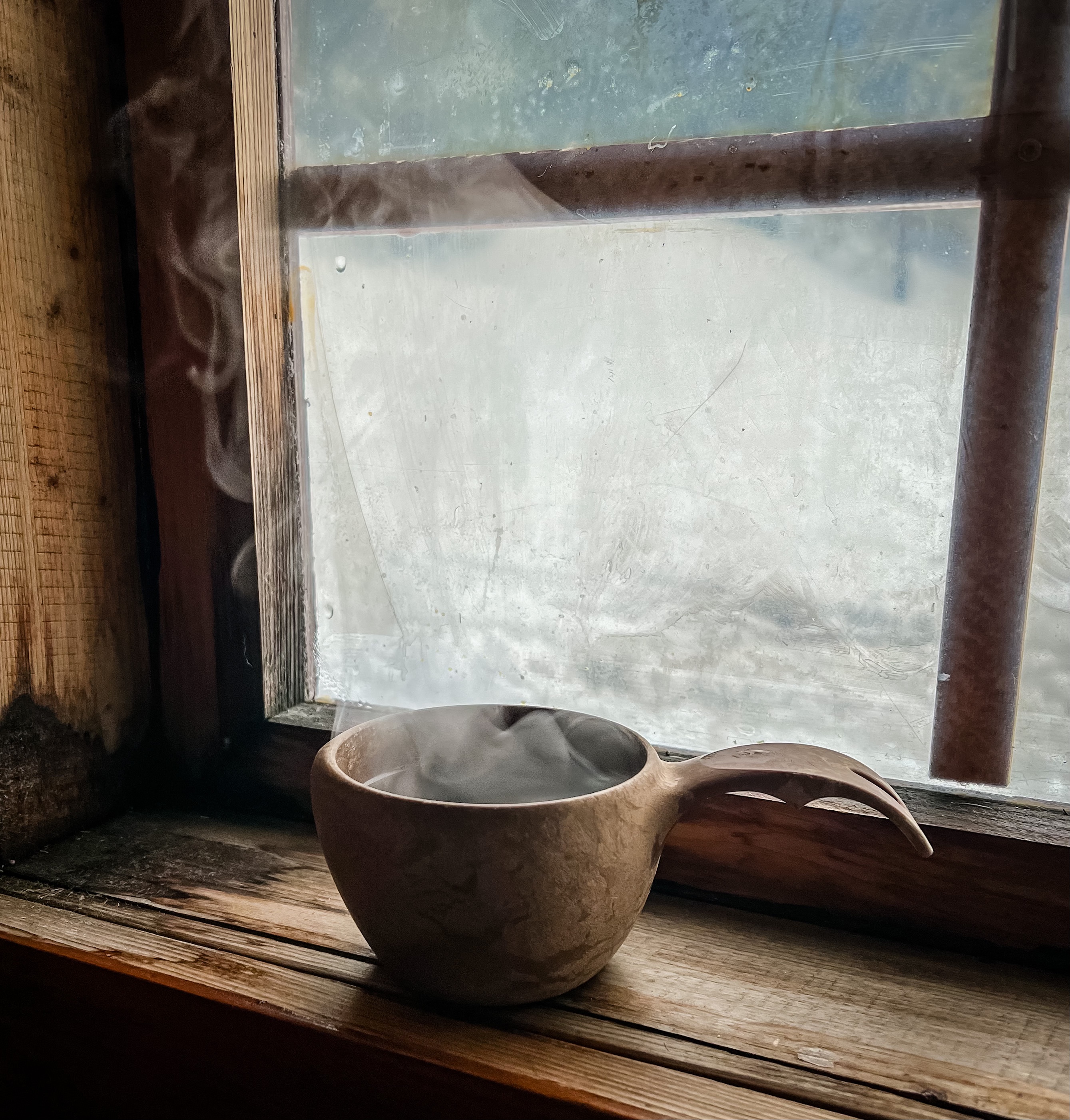
Ours was served in a kuksa, the traditional carved wooden cup associated with Sámi culture in northern Scandinavia. They’re small, rustic, usually made from birch, and exactly the sort of useful souvenir I should have bought while I was there.
I did not.
I bought Viking gin instead.
We all make choices.
Skål!


Leave a Reply