
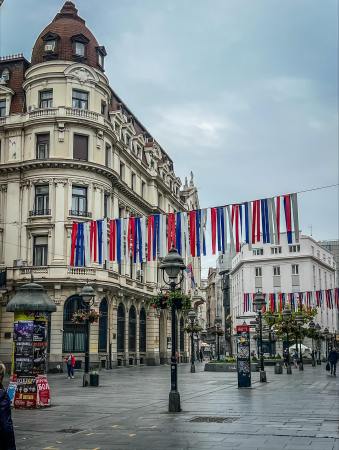
We are docked in Belgrade, Serbia today. And we can walk into town from the port – no herd bus. Huzzah! If nothing else, I’ve learned a lot more about Eastern European / Balkan geography on this trip. Belgrade is located at the meeting point of the Danube and Sava Rivers. The Danube connects Belgrade eastward to the Black Sea, while the Sava links it westward – establishing the city as a vital crossing point for empires, cultures, and trade routes.

I think we’ve cracked the code on how to get a small(er) group tour on a river cruise. Choose the optional (not free) tour labeled demanding. This scares away 80% of the cruise. Best tour and tour guide of the cruise so far. There were only 13 of us – all capable of walking up 100 stairs to start our tour, and keeping a pace faster than snail.
Our guide, Marko, is a linguist and his English was excellent. In addition to English (and probably 6 other languages), he also chose to learn Swedish, which is a head-scratcher, but go Marko.

We started our tour at this statue. Officially, it is the Monument to Fallen Coastal Workers. It was built in 1952 to commemorate port workers who died during the National Liberation War of Yugoslavia (1941–1945). Unofficially, he is Mr. February from the USSR-Satellite Calendar of 1982.

So, Belgrade
Conjure an image of a beautiful city in Europe. That city is not Belgrade.
Communist gray is alive and well in Belgrade. It’s difficult to describe. Some combination of post-Communism bleakness, smoky haze, and urbanization. The whole city seems caught somewhere between decay and renewal.


Found a couple of Soviet-era Zastava (Yugo) cars. Woof, the construction on these things was bad. They look like rolling sadness.

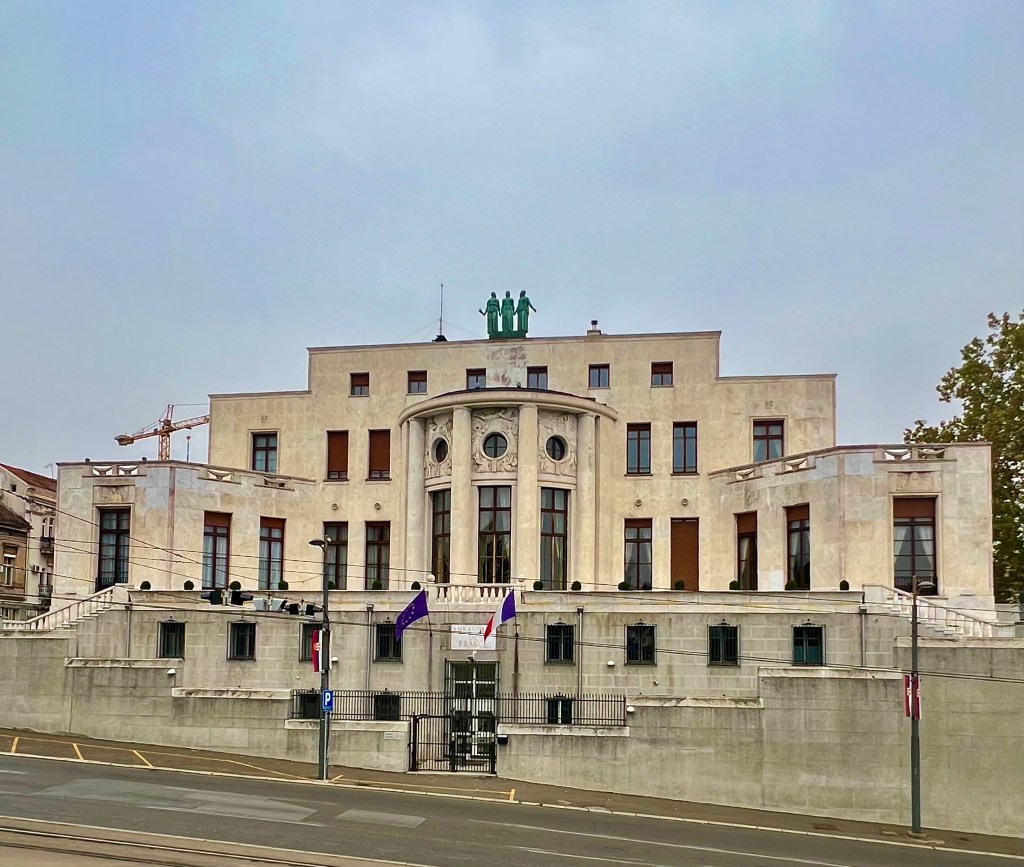
The French Embassy
Walked by a building that stopped me in my tracks. What is this Art Deco treasure doing in the middle of Belgrade? This is the French Embassy. It was designed by French architect Roger-Henri Expert, and constructed between 1927 and 1928. It’s considered an Art Deco masterpiece. Marko said they only rarely open their doors to the public. Dammit. Wish I could have peeked inside. You know they have some swell parties in there.
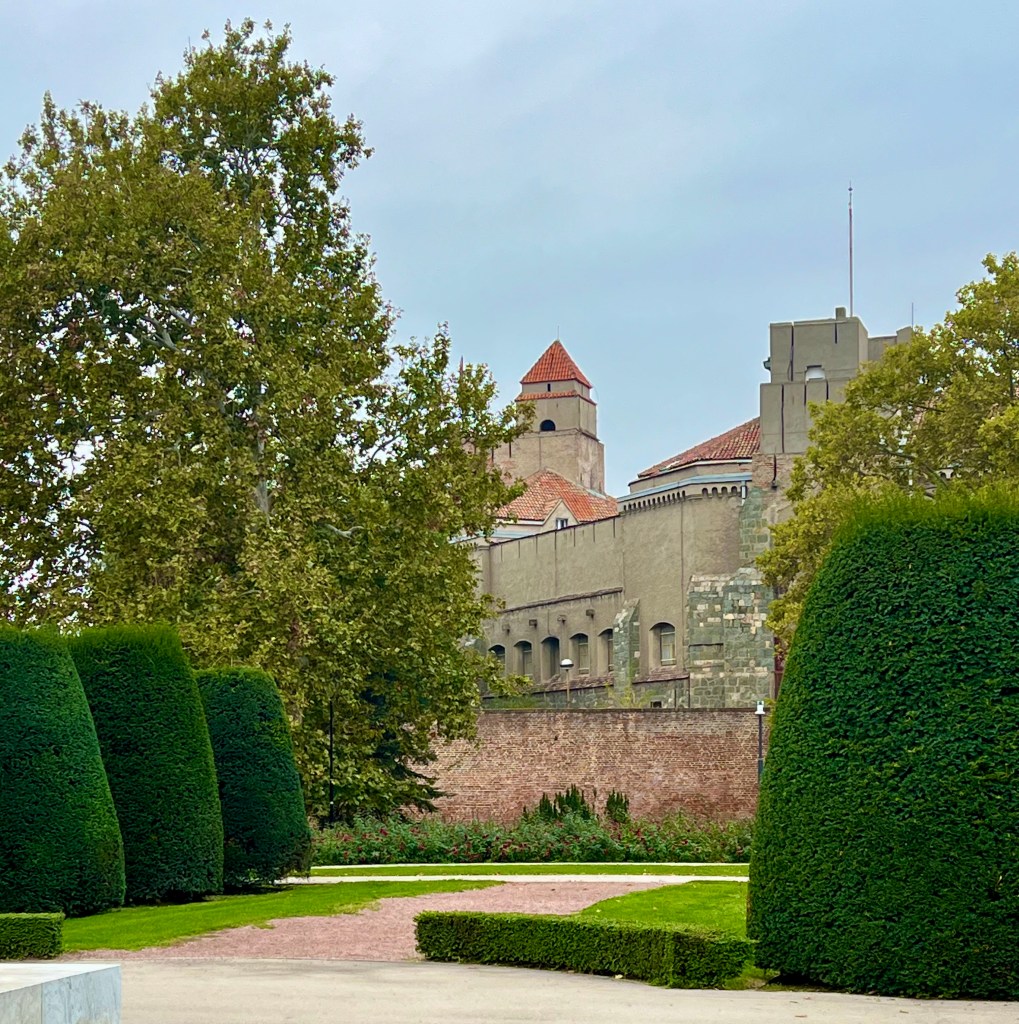
Kalemegdan Park
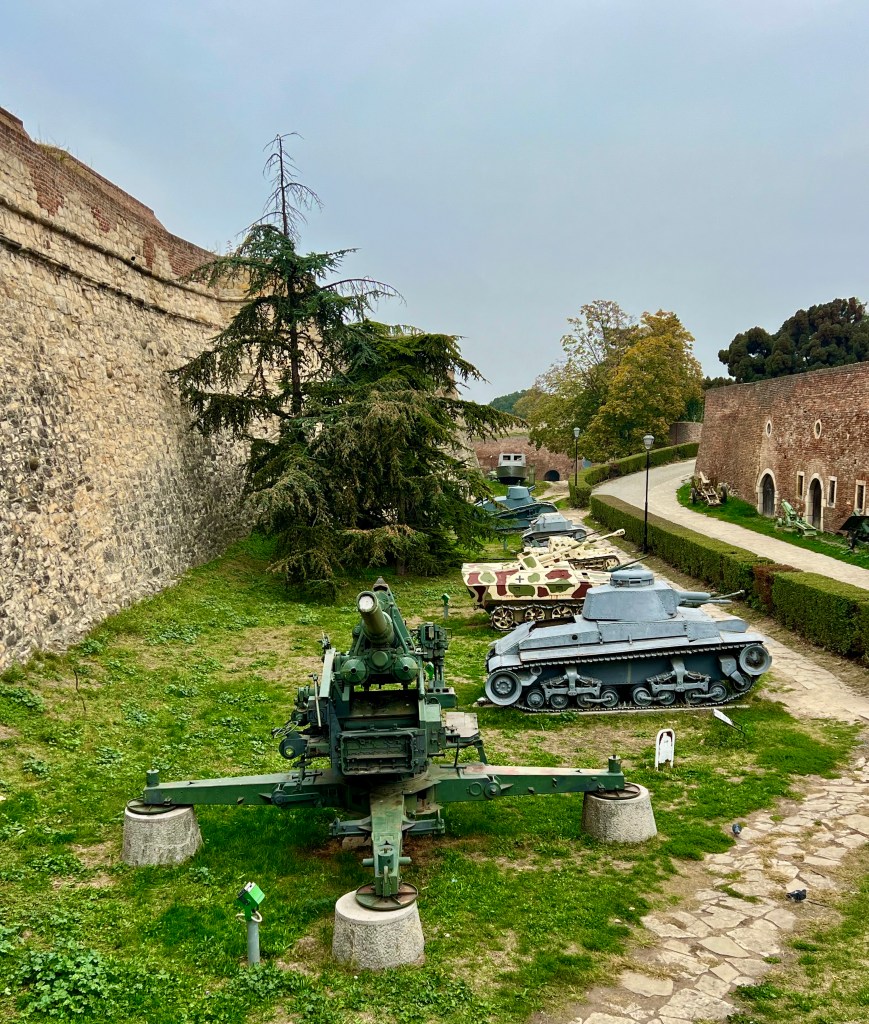
Next: we’re on our way to Kalemegdan Park – it’s part park, part fortress, and part open-air history lesson. The park surrounds the Belgrade Fortress, an historical citadel with roots dating back to Roman times, repeatedly destroyed and rebuilt by various empires. There is also a military musueum (full stop for someone), with indoor and outdoor exhibits. The museum traces Serbia’s military past from antiquity through medieval times, Ottoman rule, World Wars, and modern conflicts, including the 1999 NATO bombing. If we were on our own, this would have been a major detour. We’ll come back later this afternoon on our own.
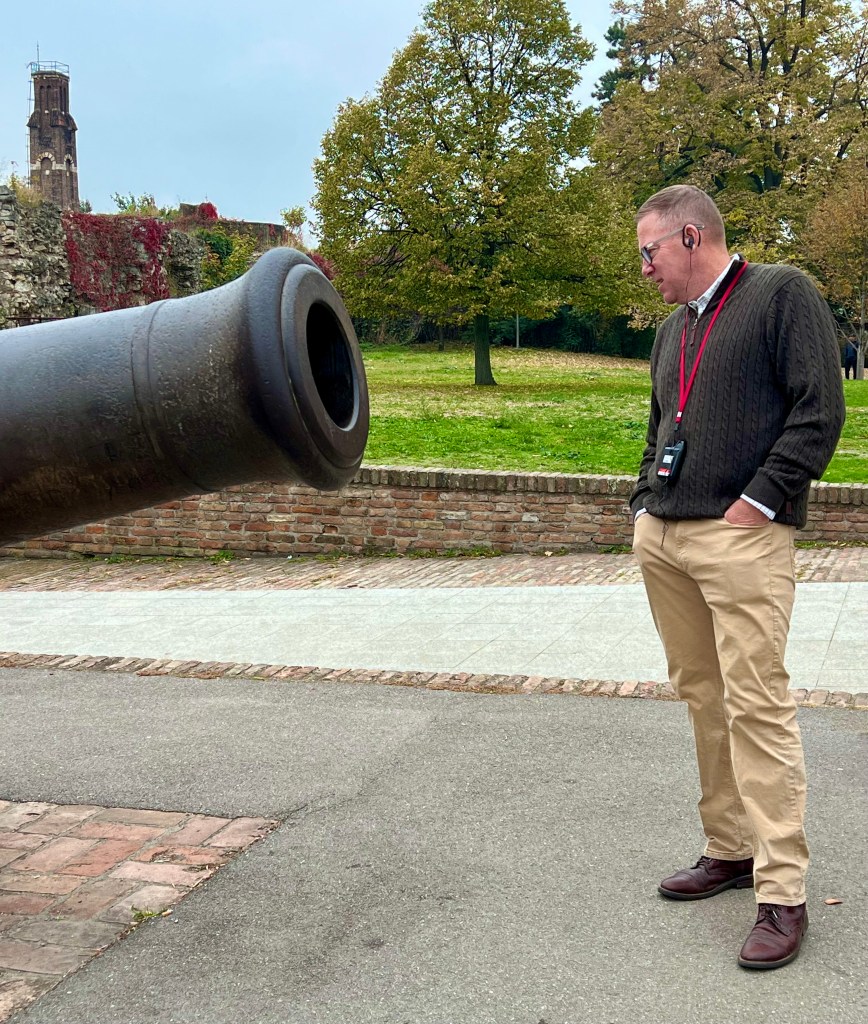
If I were the kind of person who plays chess in the park (or chess at all, really), I would totally play here.

Accidentally walked through a traveling poster exhibit called, The Tolerance Project. It’s a joint initiative of the United Nations and the Council of Europe to promote inclusion and counter hate speech – the exhibition uses art, education, and public engagement to challenge prejudice and strengthen solidarity. I would have lingered to see more of the posters had we not been with the (smaller) herd.


Coffee Break at the Hotel Moskva
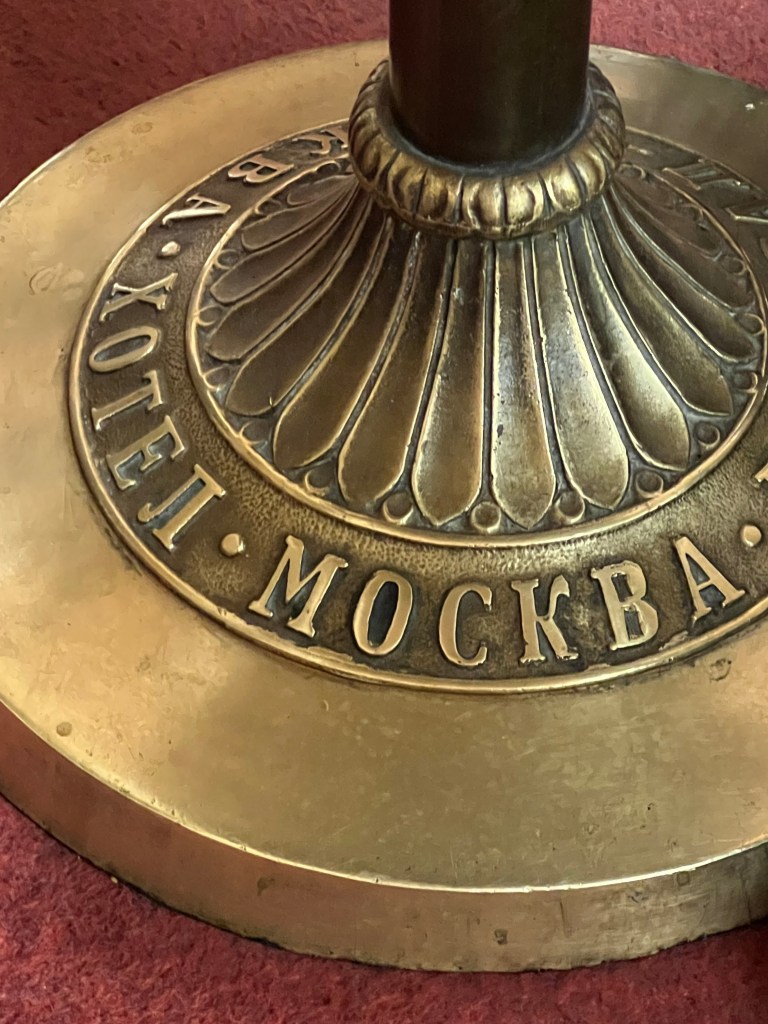
No time for poster viewing. We’re off to the Hotel Moskva for a coffee and bathroom break. The Hotel Moskva is one of Belgrade’s most iconic landmarks. Built in 1908, it’s an Art Nouveau building, topped with green ceramic tiles and intricate floral details. It’s a stunning building, inside and out. Cakes and coffee were yummy. Even the table bases were pretty. Bonus: the bathrooms were plentiful and clean.
If we’re ever in Belgrade again, I’m absolutely staying here.


Church of St. Sava
Now we’re off to the Serbian Orthodox Church of St. Sava. It’s the largest Orthodox church in Serbia, and one of the largest in the world. It’s modeled after the Hagia Sofia in Istanbul. Truly impressive structure. Breathtaking mosaic work inside. Ken got excited when Marko said we could go into the crypt (I guess this is something that’s not usually open). Was the least creepy crypt ever. No cobwebs, no dust. Not even a macabre relic (bones) down there. Look at this place: so shiny.


Accidentally attended a Serbian orthodox wedding. Our guide asked if we could take a photo of the bride, and she was graciously agreeable. I’m sure she will always remember the American paparazzi at her wedding.

Asked Marko about the political situation in Serbia. Apparently, that’s about as bleak as the buildings. It’s marked by ultra-nationalism and rampant corruption – what Marko called turbo patriotism. What an apt turn of phrase. Makes way more sense than I wish it did to me.
Lunch Break
Back to the ship for lunch, where I made one of my homemade Radler drinks: a beer + a Sprite, and a tall glass with no ice. Taught everyone at our table this trick, too. Delicious.

Belgrade Encore
This afternoon, Ken and I walked back up the 100 steps and into town again on our own. Mostly just aimless wandering so I could do some street photography. Passed by this moment and scrambled to get my iPhone out to capture it. It’s one of my favorite street photography shots ever.

Some more random images from our walkabout:


I’m not sure what was going on in Belgrade today, but it felt like everyone was getting married. We attended not one, but two more Serbian weddings.

We were hoping to walk through the Military Museum, but it was closed by the time we made our way back up there. Rats.
Живели (Cheers)!
Travel date: October 18, 2025


Leave a Reply