
Good morning, Croatia. Woke up to more fog, but prettier fog.

Celebrating our 33rd wedding anniversary today. I got Ken a very special anniversary gift this morning – Diet Coke for breakfast. 
We are docked in eastern Croatia along the Serbian border, in the town of Vukovar, which saw intense combat during the Croatian War of Independence in the mid-1990s. More on that in a minute.

Osijek, Croatia
First stop on today’s herd tour: Osijek. We took the herd bus to the Church of the Glorious Name of Mary (which sounds like something straight out of a Borat movie) and listened to a pianist/vocalist, who was very talented. After the mini-concert, we were ushered into the church courtyard, where we were offered homemade cherry brandy. Homemade hooch? I’m game. Loved this. Bought a bottle to take home. (Update: not sure if it was a bait and switch or just a bad batch, but the cherry brandy I brought home with me was not the same one I tasted in Osijek. It was legit awful, and went straight into the trash.)

Then: stood in a massive line for one toilet, the condition of which deteriorated rapidly. By the time it was my turn, I was using my emergency purse tissues for toilet paper. Herd tours continue to lose points.

Next: a slow walk through the old fortress of Osijek, where we talked about trees and taxes.
Viking Home Tours
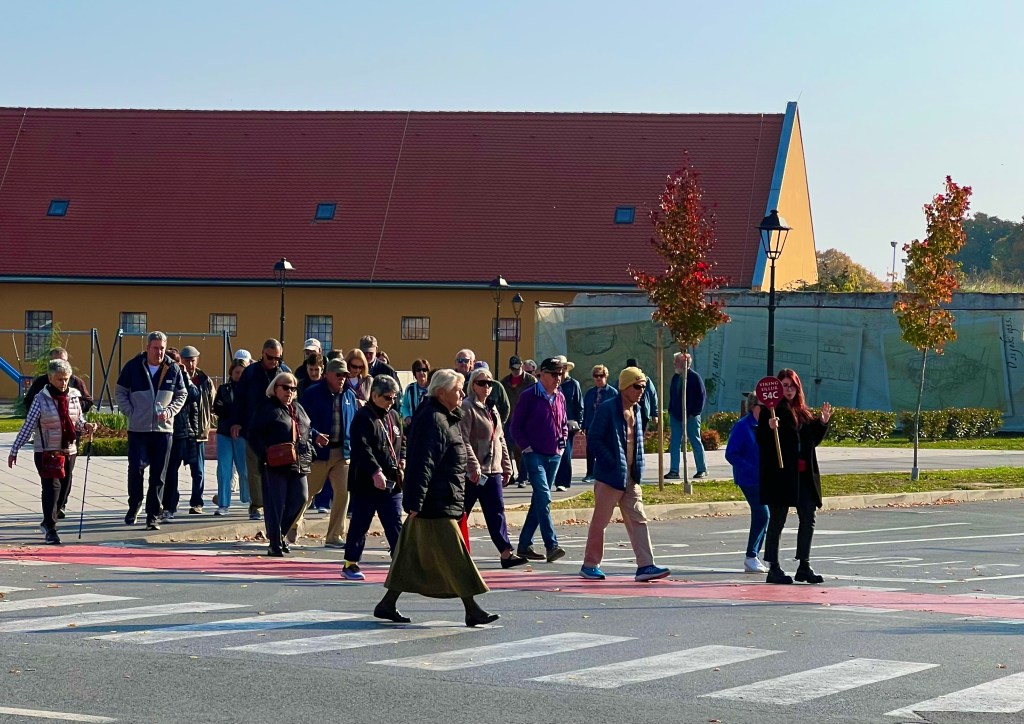
The highlight of the day was what Viking calls home tours. They divide you into groups of ten(ish) people and drop you off at various and approved host homes. The purpose is so you get an opportunity to experience real Croatian life. Our home hostess, Snežana, (which translates literally to Snow White), served us homemade coconut cake, elderflower juice, and some plum brandy made by her brother in Bosnia-Herzegovina. My second homemade hooch of the day. The brandy was decent, and I’m not blind, so call it a win.


Heard about Snežana’s family experience during the war. Her family (ethnically Croat) is from Bosnia, and they fled to Croatia during the war to escape ethnic cleaning by the the Yugoslav People’s Army and various Serbian paramilitary groups. More than half of Bosnia’s pre-war population was forced to flee their homes during the war – and Croatia took in most of them.
The areas around Osjek and Vukovar were heavily mined during the war. We were told it’s completely safe now, but I’m not going to take any walks in fields or forests.
Back on the herd bus to retrieve everyone from their various host homes and back to the ship for lunch.
Vukovar Walkabout
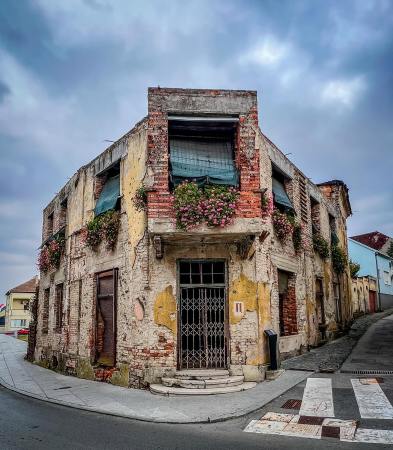
After lunch, we had some free time, so Ken and I broke off from the herd (hallelujah) and walked around the town of Vukovar on our own. It looks peaceful enough now, but in the early 1990s it became one of the fiercest symbols of the Croatian War of Independence, enduring a brutal siege that rearranged both its skyline and its soul. It’s been 30 years, but evidence of the war (bullet and shell ridden buildings) is still everywhere. Memory here isn’t optional – it’s part of the infrastructure.
I felt like I stopped to take a picture on every block. It’s been thirty years. THIRTY YEARS. And it still looks like this.


Water Tower of Vukovar
We ended up at the Water Tower of Vukovar, a powerful local symbol of resilience and remembrance. Engineers built the tower in 1968 to supply water to the town, but during the 1991 Siege of Vukovar, hundreds of artillery shells tore through it. Instead of demolishing the ruined structure, the city chose to preserve it as a memorial to the suffering and courage of Vukovar and its defenders. Today, you can take an elevator to the top, where there is a memorial center and a viewing platform.

We were up there with a group of middle school students who looked like they were bored out of their minds (in the same way middle school kids here in DC are bored to tears with the Declaration of Independence). It clearly wasn’t the first time they’d heard this story.
Popped into a grocery store (because I believe grocery stores abroad are cultural experiences) and bought a Croatian chocolate bar. It was pretty tasty.

What I got out of today: the acute danger of extreme nationalist political leaders who manipulate ethnic identities to divide the population and ignite violence.
Tomorrow: Belgrade, Serbia.
Travel date: October 17, 2025.


Leave a Reply