

I’ve posted a few times about my love of German Radlers (think: shandy), and spritzers like the Spanish Tinto de Verano – henceforth to be known as The Spritz Family. And I’ve been a little surprised by some of the (hopefully) playfully disparaging comments I’ve received: Mixing wine or beer with soda? Crazy. Nuts. Sacrilege. Disgusting. Spoils the beer. Ruins the wine. For teenagers.
Poppycock.
The Spritz Family (to include Radlers) is one of the best traditions of drinking in Europe.
A Little History
Mixing wine with water (or soda) isn’t new. The ancient Greeks and Romans diluted their wine. In fact, drinking your wine full strength was considered highly uncouth. The only people who drank wine full strength were the Barbarians (anyone who wasn’t Greek).

Why would they dilute their wine? For two reasons – to make both wine and water taste better, and to avoid getting plastered. Ancient wine was pretty rough stuff – there was no fining and filtering back then, so anything that was hanging out in the grape clusters (think debris and bugs) got put right into the wine. Mmm, tasty. And ancient water wasn’t all that palatable, either, so the ancient Greeks and Romans combined the two – a two wrongs make a right kind of situation.
Also, the Greeks knew the only way to get through a symposium (the ancient equivalent of retiring to the den for drinks and conversation, but ALL night long) was to dilute your wine. Otherwise, you ran the risk of over-indulging and ending up being the guy everyone at the office talks about on Monday morning.
The Spritz
Fast forward 1300ish years of drinking – through the fall of the Roman Empire, the rise of the Church, the Medieval Era, the Renaissance, the Scientific and Industrial Revolutions – the spritz gets a name.
Although the spritz is considered the domain of the Italians, it was probably created by Austrians. In the 1800s, the Austro-Hungarian Empire controlled much of the Veneto region of northern Italy. As the story goes, the Austrian soldiers there found Italian wines too strong, and started “spritzing” them (from the German word, spritzen, which means, to spritz) with water to lighten them up.
The spritz as a drink evolved over time. At first, the recipe was simply wine with a spritz of water. Sometime around the end of the 19th century, soda water was created, and replaced still water. Oooh, bubbles.
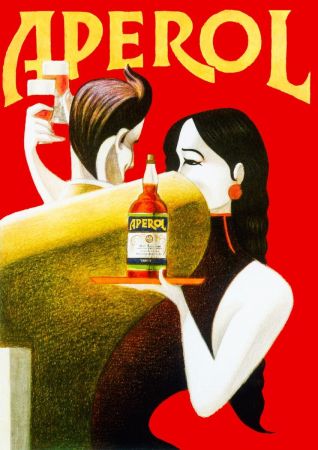
Also, advertising in the late 19th century was glorious. If I had any more room on my walls, I’d hang any one (or all) of these in my house.


Aperol distinguished itself in the 1920s and 30s with marketing campaigns targeting women – “Signora! Aperol keeps you thin”. Turns out we don’t need Ozempic, just Aperol.

In the 1970s, Prosecco replaced water in spritzers, making them a bit more flavorful, and appealing to a younger, more modern crowd.
Sidebar: Aperol actually reminds me of a cold medicine I took in the 70s and 80s called Triaminic. The orange one. I loved that stuff. I used to fabricate cold symptoms so I could take some.
By the 2000s, Aperol was building a pretty good head of steam with its spritz, and the Campari Group, and rather than compete, bought Aperol in 2003. Campari started serving Aperol spritz in the now ubiquitous, tall balloon shaped glasses (previously it had been served in a rocks tumbler). Genius move. That glass (and an aggressive marketing campaign) catapulted the Aperol spritz into the category of global phenomenon.
Ruining the Wine?
Not at all. More often than not, you’re making a meh glass of wine better. No one is mixing Vega Sicilia Unico with Sprite. No sane person, anyway. But Two Buck Chuck (or are we at Six Buck Chuck now?) has a purpose in life: spritzing.
For the past few decades, wine has struggled with a bit of a stuffy reputation – and sales have suffered. Wine marketers are doing anything they can to tap into the younger market, who are far more into cocktails, low, or even no-alcohol, options.
Hello, Spritz Family.

Here are some of my favorites in the Spritz Family:
Radler

In Bavarian (German) dialect, Radler means cyclist, and a Radler is the Bavarian version of a sports drink. It’s an extremely refreshing, low-alcohol drink made with beer and limonada (a German lemon lime-soda with less sugar than American Sprite). It’s usually a 50/50 mix of beer and soda, but the proportions vary according to who’s making it. I’m starting to see more and more bottled/canned versions of Radlers here and there, and while they are good, they are not the same as a Radler mixed at the tap.
I just got back from Germany, and only caught side-eye from one waitress when I ordered a Radler. It was more like, are you sure? I’m sure. Don’t judge.
Tinto de Verano

Tinto de Verano is Spanish drink that originated in the early 20th century in Córdoba. It’s a mix of 1 part red wine and 1 part lemon soda. The Spanish use La Casera a lot, but you can use Sprite or 7-Up. Serve it over ice with a slice of lemon or orange. Super easy, super delicious. Tinto de Verano means summer wine and is usually served during the summertime. Usually. When I’m in Spain in the middle of winter, it’s a wintertime drink.
We were told the Spanish don’t really drink sangria, favoring TdV instead. Only tourists drink sangria. Duly noted. Making sangria is time consuming (although I do have a great recipe). Making TdV is quick, cheap, and easy. And will now replace sangria for me.
Given the choice between Tinto de Verano and a cheap, bulk red wine, I’m team TdV all day, every day.
Kalimotxo (Calimocho)
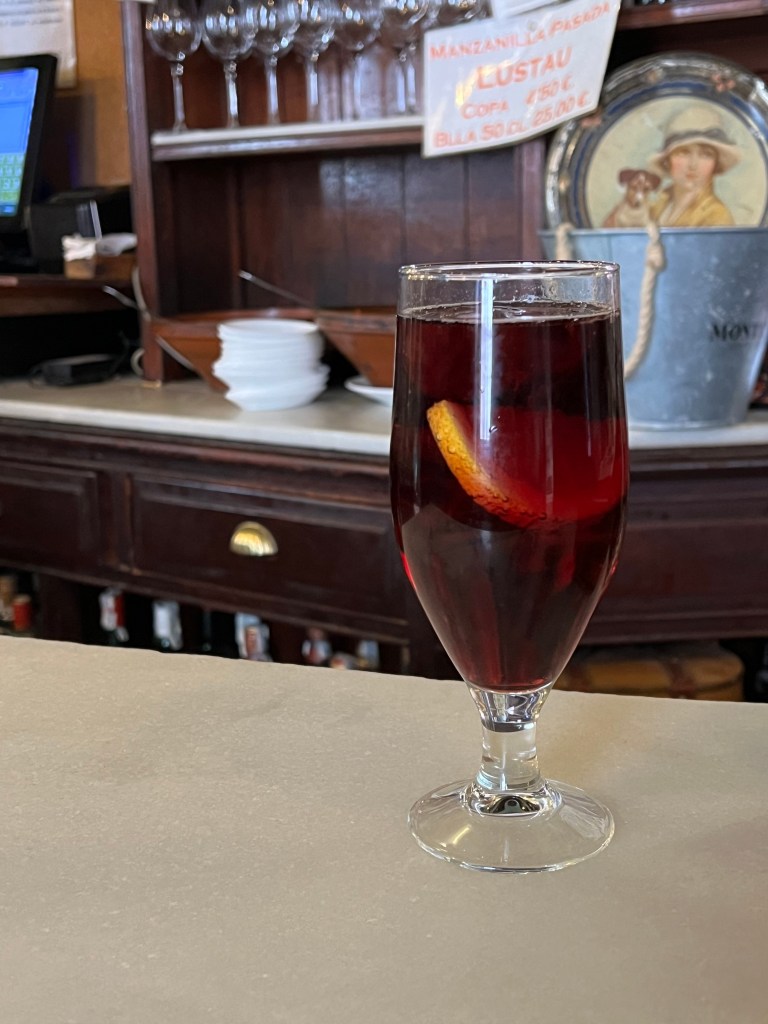
Kalimotxo has its origins in the Basque Region of Spain. Sometime in 1972, organizers of a celebration in Algorta found themselves with thousands of liters of bad wine, and they needed to find a way mitigate the taste. Someone had a Coca-Cola nearby, and accidentally desperate-dumped it into the wine. Voila! Drinkable.
Kalimotxo is super popular with young people in Spain. It’s cheap and easy to make. And again, no one is mixing good red wine with Coke.
The next time you are faced with an open bar full of Little Penguins and Yellow Tails (or some other undrinkable critter wine), ask the bartender for half a glass of red wine and a Coke or Sprite. Then mix ’em. It’s worth it just to see the look on the bartender’s face. Try it. You can thank me later.
Spritzes
Spritzes are symbolic with vacation in Europe, especially in Italy. Tall globe glasses filled with cheerful (and some hue of orange) liquid are everywhere.
This is a great little video on how to make spritzes:

- Aperol Spritz: the icon – made with Aperol, Prosecco, and soda water, garnished with an orange slice or green olives.
- Aperol = sour orange peels, gentian root, rhubarb and secret spices.
- Campari Spritz: stronger and more bitter than Aperol; made with a little blood orange juice and grapefruit sparkling water.
- Campari = orange peel, rhubarb, and secret spices. It’s red hue comes from carmine dye, a red dye derived from cochineal insects, though it has been made with vegan dyes since 2006.
- Cynar Spritz: very bitter; uses Cynar instead of Aperol.
- Cynar = artichoke leaves and secret herbs and secret spices.
- Select Spritz: slightly more bitter, and a more complex flavor.
- Select = juniper berries, rhubarb, and secret spices.
- Limoncello Spritz: limoncello mixed with sparkling wine and soda water.
- Limoncello = lemons, alcohol, and sugar.
- Hugo Spritz: a floral spritz made with St. Germain liquor, fresh mint, lime juice, sparkling wine, and soda water.
- St. Germain = a French liquor made with elderflower blossoms, neutral grape spirit, and sugar.
Porto Tonic
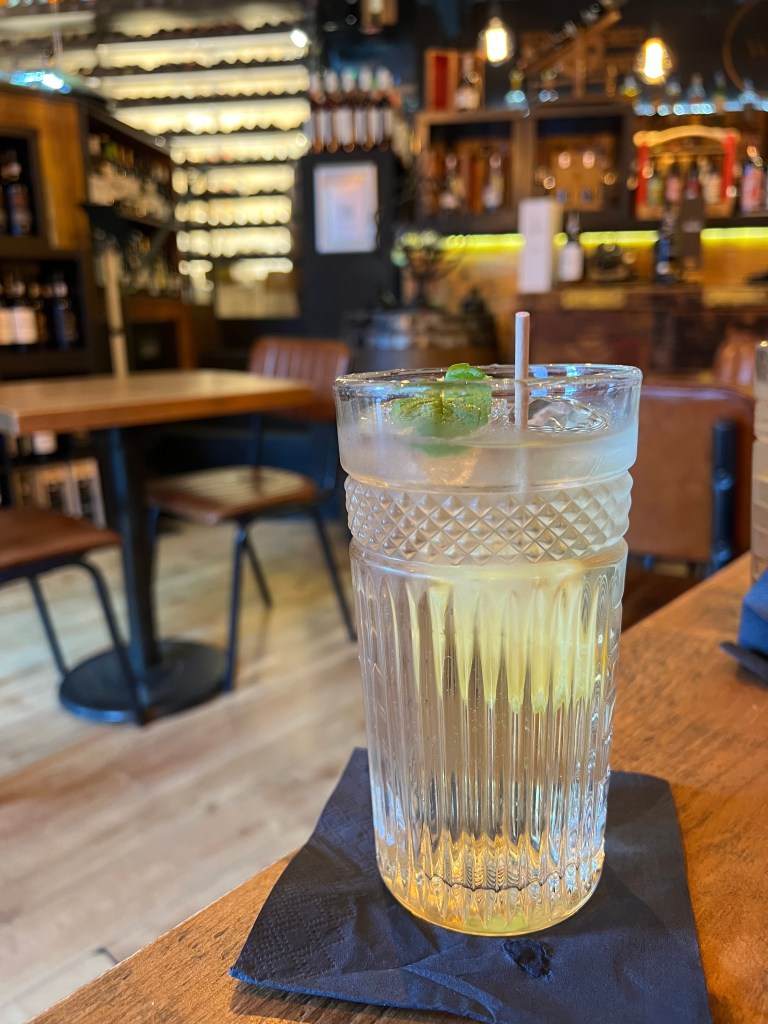
Unfortunately, port has a bit of a reputation for being something your grandpa drinks. But the port wine industry is working hard to engage a younger demographic with styles like white and rosé port, which can be used to make a range of different drinks. The Porto tonic is Portugal’s entry into the spritz category. It’s super delicious, and super simple – just white Port and tonic water. The Porto Tonic will be on repeat rotation at our house this summer.
The Spritz Family isn’t crazy, nuts, sacrilege, or disgusting. The Spritz Family is tradition, moderation, and celebration.
Cheers!


Leave a Reply